

Sofie
 Case Background
Name: Sofie
Age: 8 years
Sex: Female, spayed
Breed: Tibetan Terrier
Age: 8 years
Sex: Female, spayed
Breed: Tibetan Terrier
 Clinical History
Please review Sofie’s clinical history.
Sofie became lethargic 10 days ago, and is now having brief syncope during periods of exertion that occur about 2-3 times a day. The emergency veterinarian detected a slow heart rate that was unresponsive to atropine. He recommended an emergency cardiac consultation.
 ECG
ECG
View Sofie’s electrocardiogram (the black bar represents one second)
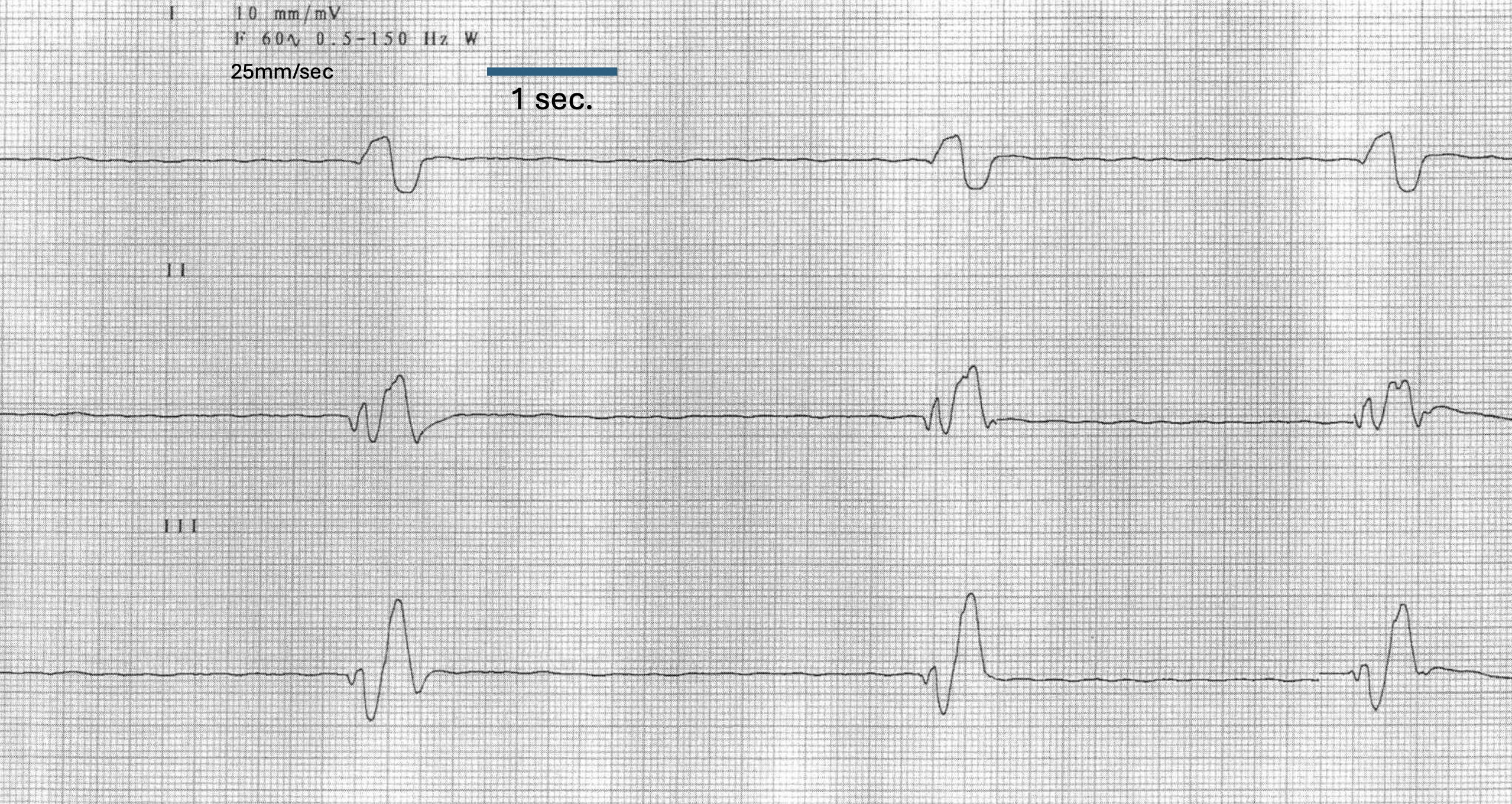
What abnormalities are present on this ECG?
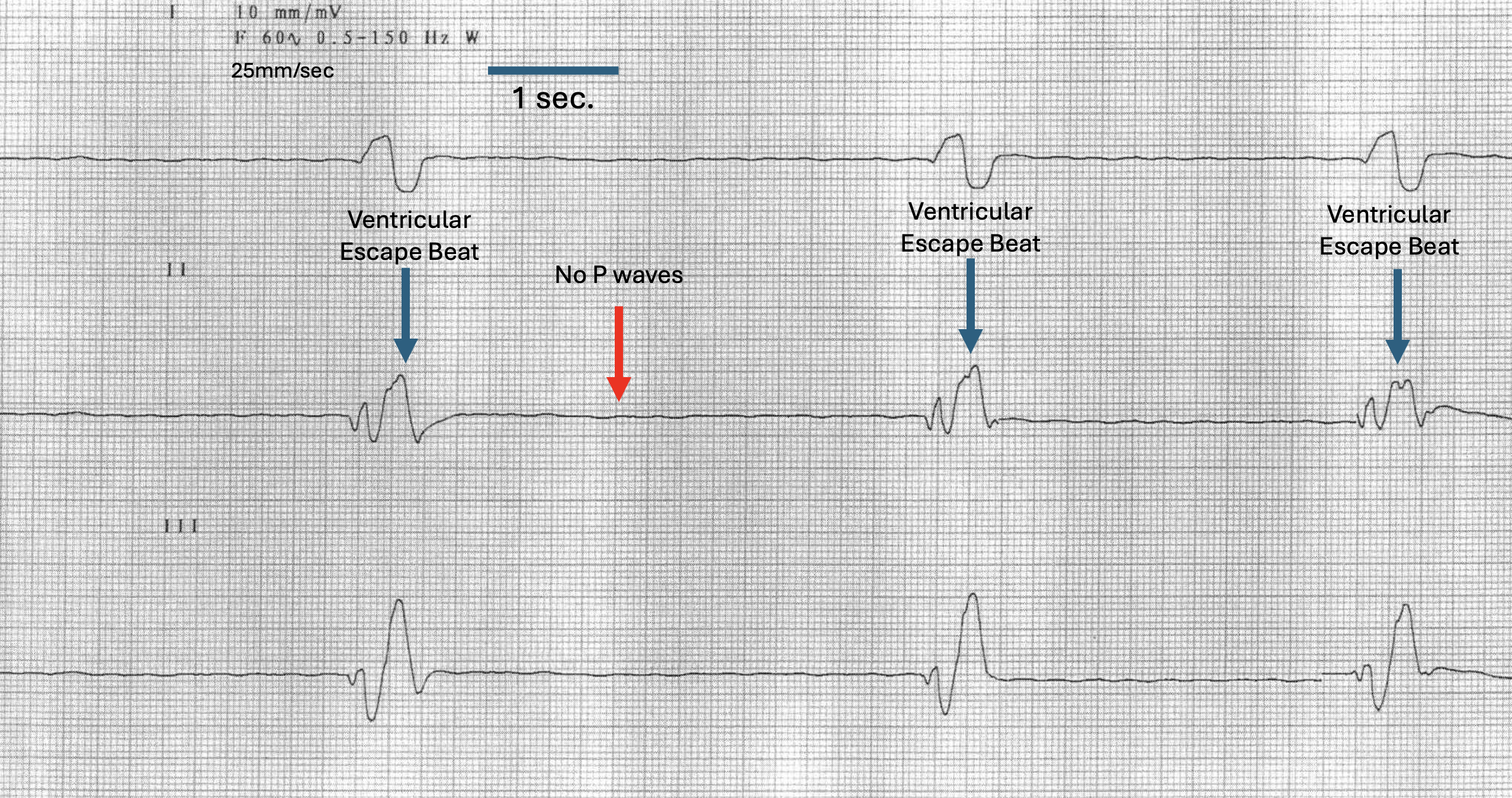
 Discussion & Treatment
Discussion: The bradyarrhythmia is almost certainly the cause of the recent lethargy and syncope. This can be seen with hyperkalemia, so a serum potassium level should be checked and corrected immediately. In patients with atrial standstill and normal potassium levels, we typically suspect an idiopathic origin. This is called persistent atrial standstill and is due to idiopathic fibrosis of the sinus node and surrounding atrial myocardium. The fibrosis will sometimes spread to the ventricles. Studies indicate that despite this possibility, articificial pacing therapy can be very effective at relieving clinical signs and extending the patient’s life by over 2 years. Many of these patients develop severe atrial dilation and will eventually experience congestive heart failure. Treatment/management: Implantation of an artificial pacemaker is warranted as soon as possible.